



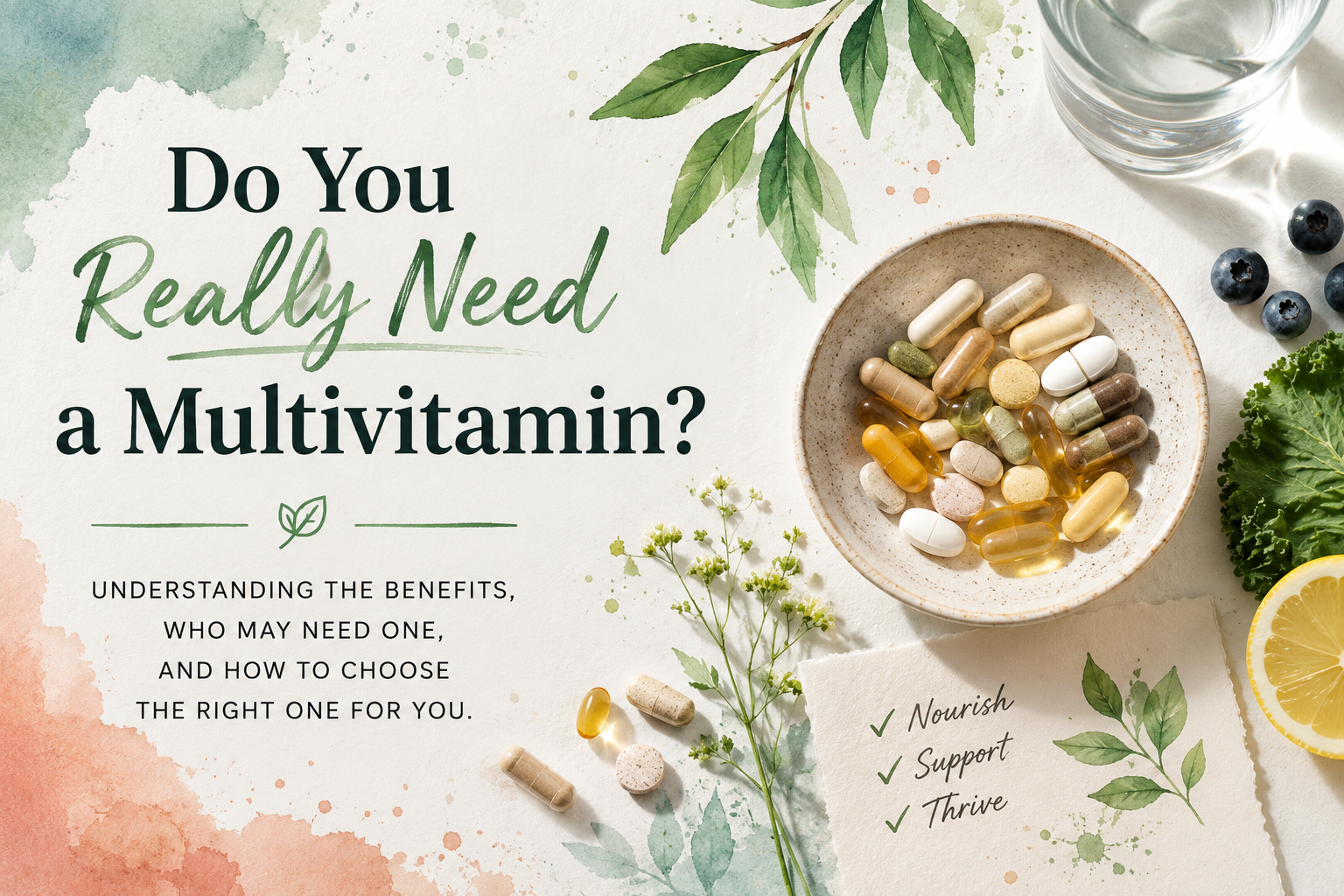

Walk down the supplement aisle, and you’ll find shelves filled with multivitamins
promising to support everything from energy and immunity to heart and bone health. But
with so many options available, you may be wondering: Do you really need a
multivitamin?
The answer isn’t the same for everyone, but for many people, a quality multivitamin can
help fill nutritional gaps and support overall wellness.
Food Comes First
The best source of vitamins and minerals will always be a balanced diet rich in fruits,
vegetables, whole grains, proteins, healthy fats, nuts, and seeds. These foods provide
not only essential nutrients but also fiber, antioxidants, and plant compounds that work
together to support good health.
However, life isn’t always perfect. Busy schedules, dietary restrictions, changing
nutritional needs, and even the quality of today’s food supply can make it difficult to get
every nutrient your body needs each day.
That’s where a multivitamin may help.
Who May Benefit Most?
A daily multivitamin may be especially beneficial if you:
Eat a limited or restrictive diet
Skip meals due to a busy lifestyle
Are over the age of 50
Are expecting or planning a pregnancy (with guidance from your healthcare
provider)
Experience increased physical or mental stress
Want added nutritional support during seasonal changes
While multivitamin isn’t a replacement for healthy eating, it can serve as nutritional
“insurance” by helping provide important vitamins and minerals your diet may be
lacking.
What Should You Look For?
Not all multivitamins are created equal. When choosing one, consider these factors:
Quality Ingredients: Look for reputable brands that prioritize purity, potency, and
third-party testing whenever possible.
Bioavailable Nutrients: Some forms of vitamins and minerals are easier for your
body to absorb than others.
Age and Lifestyle: Nutrient needs vary depending on age, gender, activity level,
and life stage.
Appropriate Dosages: More isn’t always better. A well-balanced formula should
provide meaningful levels of nutrients without excessive amounts.
Can a Multivitamin Boost Energy?
One of the most common questions we hear is whether a multivitamin will increase
energy.
If you’re deficient in certain nutrients—such as B vitamins or iron (when
appropriate)—correcting that deficiency may help improve energy levels. However, a
multivitamin isn’t a stimulant and won’t replace the benefits of quality sleep, regular
exercise, hydration, and a nutritious diet.
Think of it as supporting your body’s normal functions rather than providing an instant
energy boost.
Are There Times You May Need More Than a Multivitamin?
Yes. While multivitamins provide a broad range of nutrients, some individuals may
require additional support based on their unique needs. Common examples include:
Vitamin D
Omega-3 fatty acids
Magnesium
Calcium
Vitamin B12
Iron (only when appropriate)
Before adding individual supplements, it’s always a good idea to discuss your needs
with your healthcare provider, especially if you have a medical condition or take
prescription medications.
The Bottom Line
A quality multivitamin isn’t a magic solution, but it can be a smart addition to a healthy
lifestyle. Combined with wholesome foods, regular movement, good sleep, and stress
management, it may help support your overall wellness and provide peace of mind that
you’re covering your nutritional bases.
If you’re unsure which multivitamin is right for you, stop by our store. Our knowledgeable
team is happy to help you compare options and find a formula that fits your age,
lifestyle, and wellness goals.
If you already know what to take, you can shop our store online here.
Your health journey is unique, and we’re here to help you every step of the way.